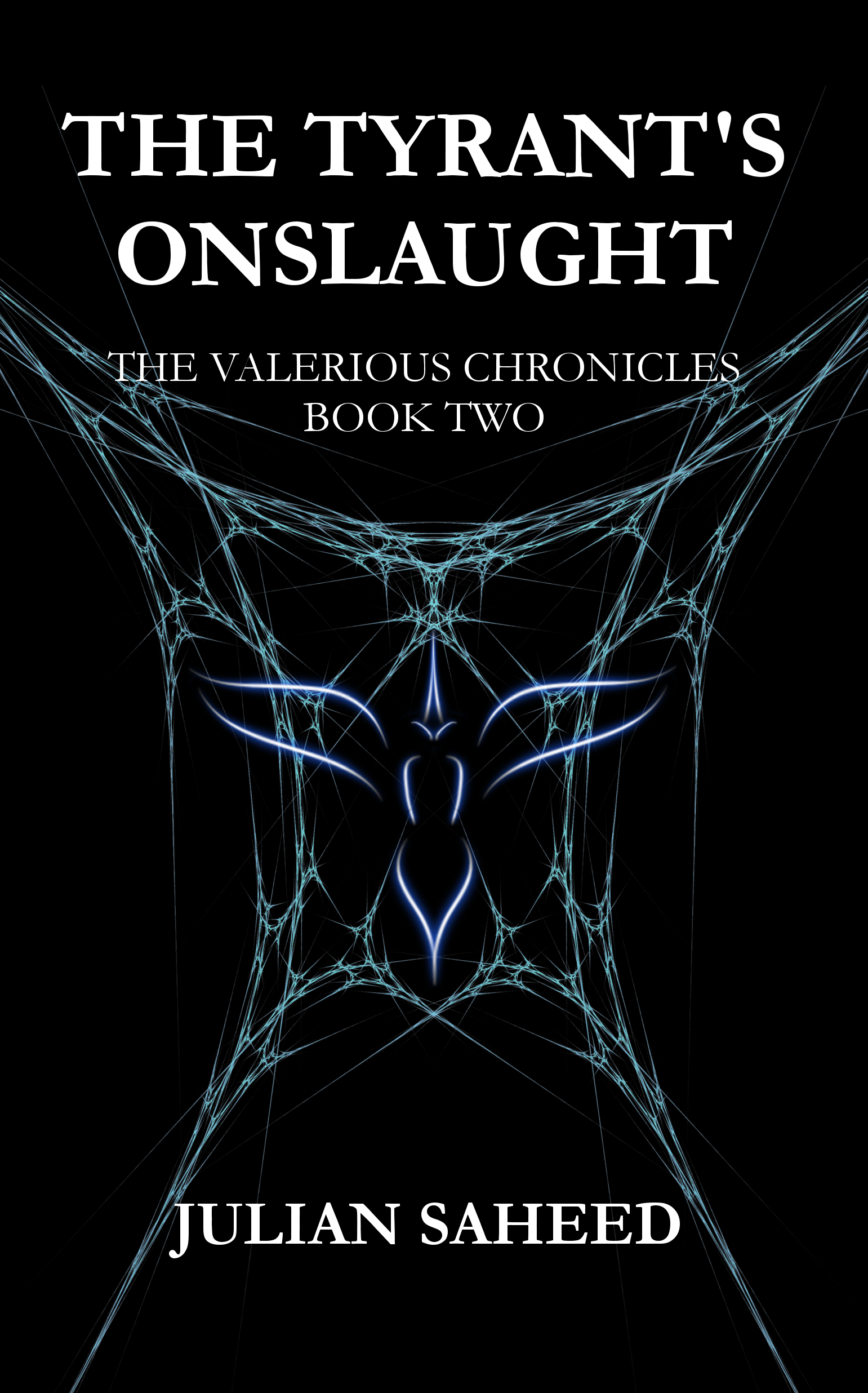
Tyrant’s Onslaught set for release August 31st

TO Alternate cover 2

To all those eagerly awaiting the release of book two in the Valerious Chronicles, I have finally set the official release date.

The Tyrant’s Onslaught is set to be released across all formats on the 31st of August 2014. I am hoping to have preorders available at the end of July.

Hang in there. Not too long left.

Guest Author – Terry W. Ervin II on the experience of writing Soul Forge

Today I am privileged to provide you with a guest post by Fantasy/Sci Fi author Terry W. Ervin II. Having recently published the third book in his First Civilizations Legacy Series, Terry shares with us what he has learned in writing Soul Forge. I hope you enjoy reading his wise words and take as much away from them as I did.

Soul Forge Cover

What I Learned While Writing Soul Forge

From the first page of a first draft, of the first novel an author writes, to writing ‘The End’ for the final draft of that first novel, the author has probably learned quite a bit about writing—even if that first novel isn’t quite good enough to find a publisher (or of sufficient quality to merit self-publication). Heck, most writers, upon completing their first novel’s first draft, can see a major improvement in writing and storytelling skill when comparing the early chapters to the later ones.

While there is a learning curve, where writers learn a lot (or hopefully do) during their early efforts, established authors also learn something—maybe many somethings—during the process of completing each project. Perhaps it’s how to employ a new structure, such as creating a frame story, or figuring out how to write using a different point of view. Sometimes it’s not learning something new, but improving upon an already existing skill or a familiar technique, such as more effective use of foreshadowing or devising how to make an action scene flow just a little bit better.

For me, all of this comes from actually writing and by comparing what I’ve written with what I learn through reading and studying other authors’ works. I also learn from beta reader and crit partner comments, and from working with an editor. This type of learning requires an open mind coupled with the drive to create a story that’s better than the previous one.

Soul Forge, my forth published novel, is my most recent release. And, through the process of writing it, I believe I made significant strides in improving my writing in several areas.

Soul Forge is the third novel in the First Civilization’s Legacy Series. The stories are mainly action-adventure and focus on Flank Hawk, a farmhand turned mercenary in a post-apocalyptic fantasy setting.

The first and probably the most important thing I learned was how to write the third novel in a series such that readers could pick up Soul Forge and enjoy it as much as anyone who’d read Flank Hawk and/or Blood Sword, the first two novels in the series.

Through reading and study, I’d learned how to write Blood Sword, so that readers could select it as the first novel in the series they might read. But that was the second novel in the series. Soul Forge, being the third, added a greater level of complexity to accomplish the same objective. The world in the series is extensive, with countries and cultures and history and conflicts that are built upon while being integral to the plots of each novel, beginning with Flank Hawk and moving forward. Add to that, the characters which appeared earlier in the series, and return to play a part in the third. There are even characters that died in the earlier novels, but continue to impact the characters and their actions in Soul Forge, and will continue to do so as the series continues.

I refined the use of dialogue, description, character thoughts, flashbacks, and character actions/responses to provide the necessary backstory within the context of the current story being told. It’s accomplished in such a way that it isn’t redundant, and actually reminds veteran readers of what’s happened in the series while providing additional information or insight.

Second, all of the novels in the First Civilization’s Legacy Series are written in first person point of view. Even so, characters other than the POV character (Krish/Flank Hawk) are well developed, with a number becoming the favorites of readers. In Soul Forge I worked to improve using actions, dialogue, and POV character thoughts and perception to more fully bring the characters that populate the novel to life.

Finally, I worked to improve my ability to intertwine secondary plotlines with the novel’s main plot to add depth of interest and suspense for the reader while raising the stakes for the characters involved.

An example of this was the personal duel brought upon Mercenary Flank Hawk and, although delayed until young Enchantress Thereese is revived (or dead), it’s a challenge the mercenary knows he cannot win. Even Imperial Seer Lochelle predicted that, should he cross blades with Flayzin, the captain of Supreme Enchantress Thulease’s guard, Flank Hawk will die.

Complicating the situation is the source of the conflict (the death of a prince) and the fact that both Flank Hawk and Captain Flayzin serve Supreme Enchantress Thulease. The two men must set aside their conflict as best they can while accompanying the enchantress as she seeks the legendary Sleeping Sage in a bid to discover a way to revive her dying daughter.

Why would Flank Hawk accompany the supreme enchantress, through perilous circumstances and fighting alongside Captain Flayzin, knowing that the man’s sword is destined to slay him?

That concern and many others are brought together as the story moves forward, aboard the Hunchback Maiden while crossing the Mediterranean, traversing the vast desert of the Southern Continent, and even venturing to the Mountainhold of the secretive Svartálfar.

Even as I write this article, my mind is on my next project (working title: Relic Rescue), the sequel to Relic Tech, the first novel in the Crax War Chronicles. While I’ll be using what I learned while writing Soul Forge and the other novels that came before, I’m sure I’ll improve not only in several areas of writing, but learn something new. Or at least I hope so.

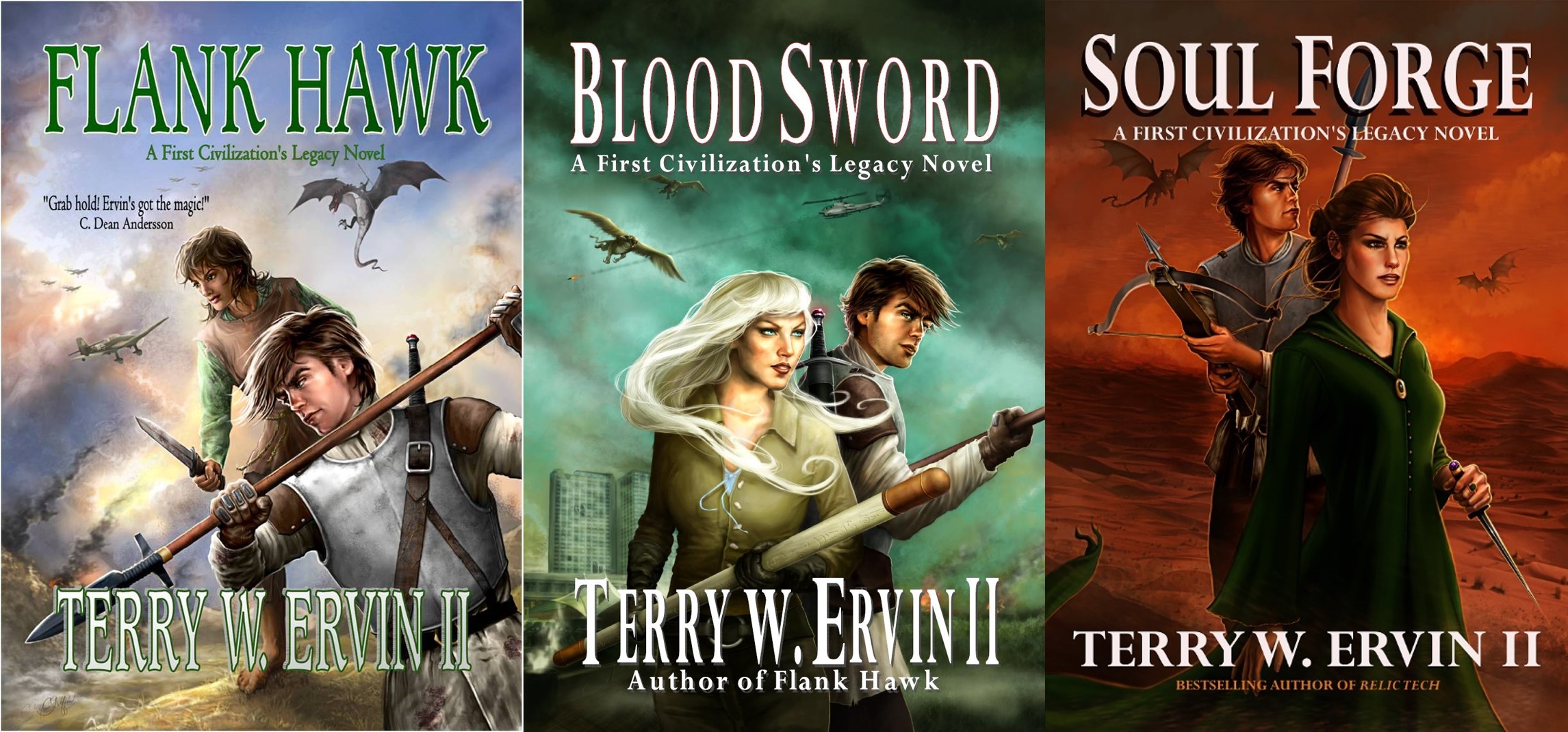
First Civilzation Legacy Books FH BS SF

Terry W. Ervin II is an English teacher who enjoys writing fantasy and science fiction.

His First Civilization’s Legacy Series includes FLANK HAWK, BLOOD SWORD and SOUL FORGE, his newest release from Gryphonwood Press. Terry’s debut science fiction novel RELIC TECH is the first in the Crax War Chronicles and his short stories have appeared in over a dozen anthologies and magazines. The genres range from SF and mystery to horror and inspirational. GENRE SHOTGUN is a collection containing all of his previously published short stories.

You can purchase Soul forge at the following retailers:

To contact Terry or learn more about his writing endeavors, visit his website at www.ervin-author.com or his blog, Up Around the Corner at http://uparoundthecorner.blogspot.com

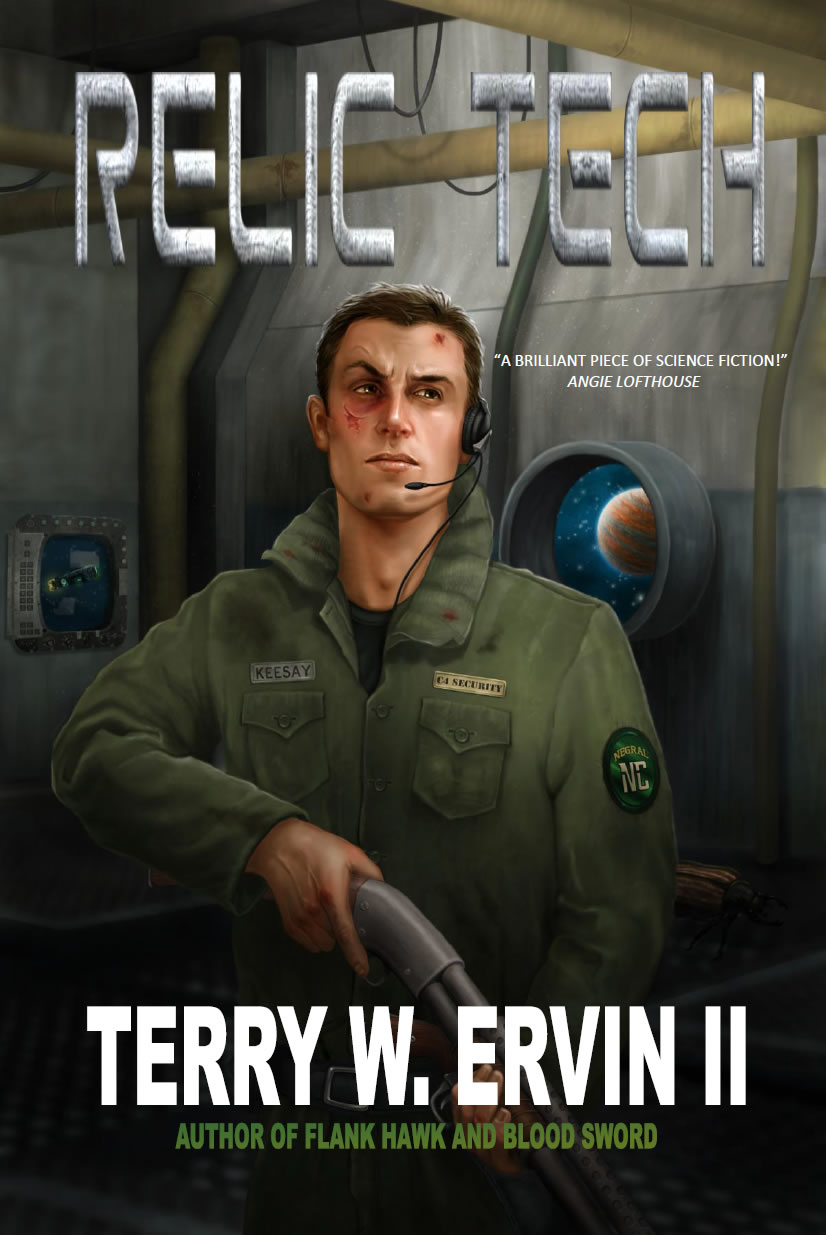
Relic Tech Cover for Blogs


My Top Picks – Part One

What are my biggest influences? There are too many to cover in one post. So over the next few weeks I will be covering off on some of the key books, movies, music and shows that have influenced me, not only as a writer, but as a person.


The Lord of the Rings:

I will begin with the most obvious of choices. This covers both the books and the movies. I am not sorry to admit that I did not read the novels until after I’d already seen the first movie. Prior to that most of the fantasy novels I read were written by authors like Feist, Eddings and Weis and Hickman. But after watching Peter Jackson’s Fellowship of the Ring I found a new obsession.

To me the trilogy of movies summarise the Fantasy genre. It is a visual delight with set pieces and landscapes that make you wish you were born a hobbit. You have heroes and villains, elves, orcs and dwarves, battles, magic and political drama. In every sense it covers the things that make so many fantasy works what they are. The names are amazing, the characters strong. The story is one of good and evil with human drama and emotion the real focus. There is so much to learn from it.

Were it not for the movies it would have been many more years before I read the actual books. And, had that been the case, it would have been a lot longer before I decided to become a writer. But thankfully I picked up the trilogy and never looked back.

Many argue about how exciting the Lord of the Rings trilogy is. I love the books, but even I admit that there are parts where you feel like you are scraping nails against a blackboard. However I look at it as a foundation from which so much modern fantasy came. There are plenty of books which are better, but would those authors have been able to write those books without the inspiration and grounding that Tolkien provided? I don’t believe so.

Thus I attribute much of my desire to write epic fantasy to the Lord of the Rings. The writing is in every sense magical. There are lines from the books and films that make the hairs on my body prickle when I hear them. Scenes in the movies stir emotions in me that real world events fail to. I listen to the soundtracks when I write, for they throw images of Rivendell, Lothlorien and Minas Tirith into my mind. I can’t explain why, but I feel I have more of my own emotions invested in middle earth than in our earth. And I don’t regret it one bit.


Remember the Titans:

From an obvious choice to one less so. Everyone loves a good triumph over adversity story. Sport is one of the best mediums for it. I watched the mighty ducks and cool runnings as a kid. Practically everyone my age did. But the one movie that has stuck with me is Remember the Titans. I consider the Lord of the Rings and Star Wars to be outside of the normal catalogue of movies. They are an enigma of nerd royalty which would always win a competition for best movie. As such, taking them out of the running, I would name Titan’s my favourite movie of all time. It’s a big call, I know.

I have watched this movie countless times now. Every single time I am amazed at how much of an emotional rollercoaster it is for me. I swing from laughing, to shaking my head, to almost fist pumping in ecstasy as the movie plays out. At one point I almost struggle to hold back tears alongside the two main characters. Every time! For a movie to captivate me like that, it is doing something very right.

I have taken a lot from this movie with me in my journey to become a writer. The drama in my writing is heavily influenced by the character interactions in Remember the Titans. The varied cast of characters, though in many ways following established tropes, reminds me of what the right mix of personalities is. When I seek to place humour into my work I often think back to the lines in this movie which crack me up every time.

Most of all I am reminded that sometimes all you really need is an inspirational ending. I won’t necessarily put an inspirational ending in my own writing. But as soon as the credits roll on this movie I feel the desire to get to my keyboard and start typing. And the value of that can never be played down.

Stay tuned for more over the coming weeks.

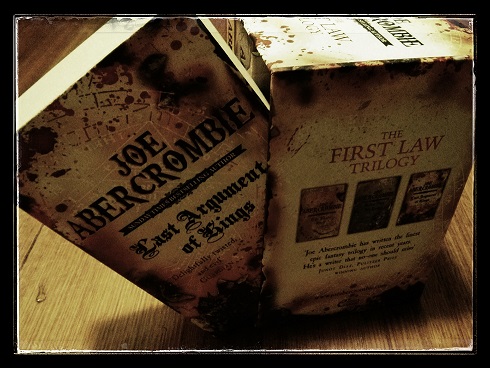
Review: The Last Argument of Kings by Joe Abercrombie

Imdff

You know you have read a top class book when it’s over and you feel depressed. I have post trilogy depression, amongst the worst kind of book related disorders. One where you have invested so much of your time and soul into a multi character epic that you tend to forget that in the morning you have a job to go to. Yet at the same time I feel like my eyes have been opened to a new world. Grimdark!

Prior to reading Abercrombie’s work I had never experienced such truly gritty and dark fantasy. I now know it is a genre of its own, but to be honest I look at it more as ‘Real Fantasy’. In a similar fashion to the mass market popularity of Game of Thrones, where other fantasy series have failed to grow, the First Law gives us everything we would expect from a well constructed fantasy universe, but also gives us characters that could have come from a history book. They don’t just have faults, they live and breathe by their faults. Reading Joe Abercrombie’s books has shown me how characters can be despicable and make you root for them at the same time.

Logan Ninefingers and Glokta are amongst the most interesting and unforgettable fictional characters I have ever come across. Ferro and Jezal made choices throughout the books that felt so real. Often one expects a book to go a certain direction, or a character to say or do a certain thing, especially in fantasy writing. Not for Abercrombie’s characters. As I turned the pages my inner voice was constantly saying no, no, don’t do that, don’t say that. However, this only kept me wanting more.

The Last Argument of Kings is a fine climax for the trilogy. I don’t want to spoil anything here, so I will only say that it was good to see things come together in the final battle. Abercrombie takes us into the head of the many POV characters. Using his amazing blend of vivid description and gritty language, we are taken right into the thick of it. I bled with the characters. Swore alongside them. I cringed and laughed with them. Few books draw you in so deeply. I felt I lived the First Law rather than read it. And that is the biggest compliment I can give Mr Abercrombie.

I feel there is little need for me to do an in depth review of this book. It is extremely well written. All of the characters that you love are back and in fine form. The story develops in an interesting way and does not repeat itself. There is action, emotion, suspense, drama and just about anything else you need in a good book. Just go out and read it.

I don’t often recommend books to my close friends but I will be telling every fantasy fan that I know to pick up these three books and get stuck into them.

Rating 5/5

Saturday Morning

There is no time like a Saturday morning for curling up with a good book and a cup of tea. To get you in the mood here are some of my favourite quotes on reading.

“We read to know we are not alone.”
– C.S. Lewis

“When I get a little money, I buy books. And if there is any left over, I buy food.”
– Desiderius Erasmus

“Children are made readers on the laps of their parents.”
– Emilie Buchwald

“Once you learn to read, you will be forever free.”
– Frederick Douglass

“Outside of a dog, a book is a man’s best friend. Inside of a dog, it’s too dark to read.”
– Groucho Marx

“Not all readers are leaders, but all leaders are readers.”
– Harry S. Truman

“A bookstore is one of the only pieces of evidence we have that people are still thinking.”
– Jerry Seinfield

“A classic is something that everybody wants to have read and nobody wants to read.”
– Mark Twain

“Always read something that will make you look good if you die in the middle of it.”
– P. J. O’Rourke

Enjoy your cup of tea this morning!


Review: On Writing by Stephen King

IMG_20140514_182203

Even if you aren’t a writer, I would say read this book. Part autobiography, part guide to writing, On Writing  had me nodding my head so many times, people on the train must have thought I was a bobble head. I will admit that I haven’t read a lot of his fiction. I am familiar with most of his stories through their TV, movie and comic adaptations. Yet I was fully engrossed for the whole book.

King’s early life is described in such a vivid way that I felt as though I was there with him. At other times I was sitting in a chair right beside him, listening to him talk on a lazy Sunday afternoon, recalling the days of his youth. I have a new found respect for the man whose life never seemed to be easy. I can appreciate how he is able to bring so much character and feeling into his own writing. That being said, it is obvious from his tips on writing that more than life experience has brought him success.

I will not go into the details of what he suggests every writer, new or established, do when practicing the skill. However the idea of having a toolbox from which to draw is one that I feel could translate to any art form. And that is why I would recommend the book to anyone who dabbles in some form of art. King provides not only advice on techniques, but a philosophy which inspires you to stop reading his book and get to it. Often I was torn between putting the book down and getting back to writing, or continuing to turn the engrossing pages.

The amazing thing, now that I look back on the book, is that I did not agree with all of his advice. Those who have read my blog before will know that I feel there are many different techniques and forms of writing. There is no absolute right or wrong, other than traditional grammar and structure, and therefore one shouldn’t feel as though you need to follow everyone’s rules. If you tried to you’d never get any actual writing done. You’ll find conflicting advice anywhere. However, despite my occasional disagreements, I found myself finishing the book and feeling invigorated. I felt like I have the power to turn on my computer and begin typing pure gold. For King to be able to do that whilst still have me questioning some of his advice, honestly amazes me.

One thing King mentions which I could not agree with enough is that without constant reading, particularly of authors who are considered masters, or books that are popular or acclaimed, one can never truly learn to become a better writer. To see examples of good writing, to absorb them properly, will do you more good than reading 100 guides on how to write. (Ironic really to make such a point in a book on writing advice.)

I don’t and will not hesitate to give ‘On Writing’ 5 stars. It strikes a fantastic balance between motivation, technique and biography. You don’t need to agree with everything he says, but you will feel like you have the capacity to achieve your goals once you have finished reading.

Rating: 5/5

Update on The Tyrant’s Onslaught

TO Alternate cover 2

A few days ago The Tyrant’s Onslaught went out to my amazing Beta readers. It was at that point I realised it’s not long until Book 2 of the Valerious Chronicles will be ready for publishing.

I am now aiming to have it released at the end of July/early August and am looking forward to marketing the second volume.

Writing on Book 3 continues. I have hit about 20% complete so far and still aim to have the first draft finished by early 2015.

Until then sit tight, it won’t be long until Book 2 is up and ready for consumption.

20 quick tips for writers

Writers can never get enough tips and advice from their peers. In an effort to give back from my own experiences here is a list of 20 things I’ve learnt.

1)      If you don’t enjoy writing, stop and look for a new job/hobby.

2)      You will always look back and think that you can improve what you’ve already written.

3)      When selling books to strangers, Book covers are more important than your blurb and often more important than your story.

4)      Anyone who says ‘write everyday’ obviously hasn’t got a full time job and a family.

5)      That being said, write when you can, as often as you can. Even if it is only 200 words.

6)      Your back, neck, hands and arms will suffer. Maintain posture and take breaks!

7)      Don’t write what you think will sell, write what you WANT to write. Otherwise it will be rubbish.

8)      You are way more excited about your writing than your friends and family. Remember not to talk about it all the time.

9)      If someone is helping you with reading/editing make sure you really show them how much you appreciate it.

10)   There is nothing wrong with tropes and clichés as long as what you write is entertaining.

11)   Finishing a story is hard. Every time you do, pop a bottle of champagne to celebrate.

12)   Some people plan, some people write as it comes to them. Neither approach is wrong or right.

13)   Grammar is incredibly important. Don’t trust your spellchecker.

14)   Writing can be isolating. Make sure you step outside into the real world just as much as you step into your imagination.

15)   Reading for enjoyment is one of the most important tasks for someone who intends to write what others will enjoy.

16)   Set yourself small goals. My first goal was to get 1 single person I didn’t know to read my work. So far I’m doing alright!

17)   Even with a lot of hard work, it’s tough to make a living out of writing. But never give up.

18)   It is very easy for us to become overly critical. Be careful in how you judge the writing of others.

19)   Google really is your friend.

20)   Stop to smell the roses every once and a while. Then get back to the keyboard, you’ve got writing to do!

Remember the most important piece of advice, don’t take someone else’s opinions, tips or advice as gospel. Different things work for different people and different people have different tastes. Find your own happy spot and just don’t forget to never stop learning.

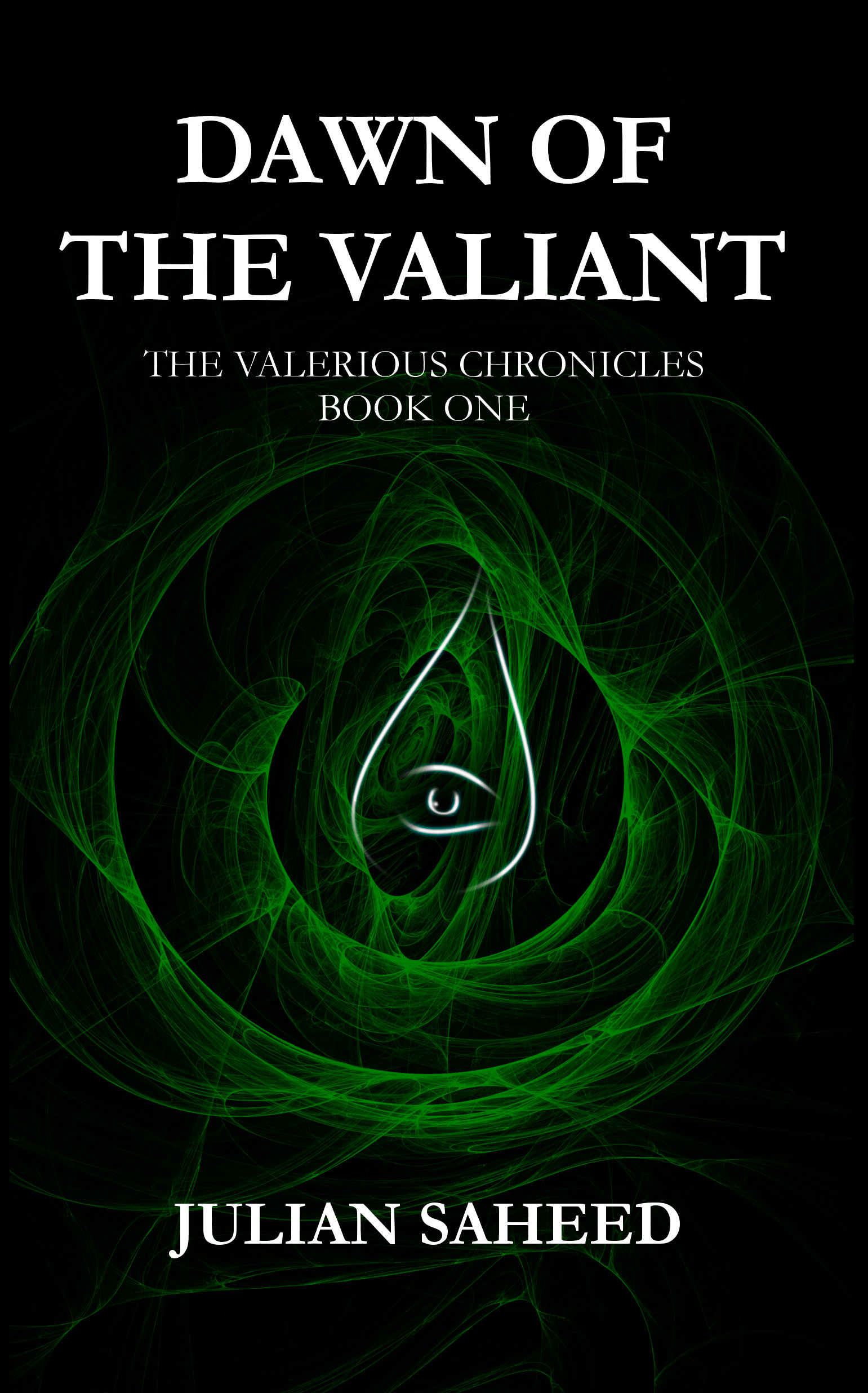
New cover for Dawn of the Valiant

In anticipation of the release of book two of the Valerious Chronicles, Dawn of the Valiant is now FREE on iTunes, Barnes and Noble, Kobo and Smashwords.

I have also been working on updated covers for the eBooks to provide a more thematic pattern throughout the trilogy. The updated cover for Dawn of the Valiant is now live. Enjoy!

DOTV Ebook Cover


5 Self-Publishing Truths

It is commonly said that writing is a lonely task. We spend most of our time sitting behind the keyboard, fuelled by coffee and tea, grinding away at the metaphorical page. And all of this by our lonesome selves.

So what about once you have finished your book and it’s ready to go? God, this must be the best time, the time you get to present your spectacular piece of art to the outside world. It’s time for the world to bask in your magnificence – because your book is the best thing that’s ever been written – don’t deny it, you know it’s true. But hold on, now you need to get it published.

Editing, agents, publishers, manuscripts, more editing, rejections, no replies, more editing and then you realise nobody wants your book. You have two choices. 1) Throw it in the chest and start the next book or 2) Self publish.

I read a lot of articles on how to self-publish successfully. I don’t often read about what the reality is for the 99th percentile.

I chose to self-publish, because, hey, I worked my behind off writing this book, and I at least want to let people read it. Once I made the decision to self-publish a whole lot of truths became apparent. Let me share some of them with you.

Truth 1: You are starting a business.

As easy as it is to publish your own work in today’s world, you are setting up a business. And if you have never set up a business, it takes a lot of work. It also takes a lot of research and a lot of reading up on things that you have likely never thought about. Setting yourself up as a sole trader, tax, forms, phone calls, formatting your manuscript into a published novel or ebook, creating or commissioning a cover… the list goes on.

Yet, again, this is where you realise how alone you are. Sure you may spend a lot of time as I do reading other writers blogs and participating in online writing communities. They do help to make you feel less alone, but only so much. Because at the end of the day you still need to do the work, no one is going to publish your book for you – self-publish remember!

Setting up everything to allow yourself to publish takes a long, long time. Especially if you have a day job that isn’t writing. But don’t despair, it is all worth it and thankfully most of these tedious parts are one offs.

Truth 2: You have published your book. Nobody Cares!

No really, nobody cares. Ok that’s not entirely true. Most of your friends and family – assuming they aren’t all overachieving, highly successful millionaires – will be very impressed and provide you with kind words of encouragement. They may even buy your book! However the rest of the world doesn’t care.

Why is that? Because there are so many books out there to buy. Readers are swamped by an endless sea of tweets, facebook posts and ads that are showing them what to read. It’s oversaturation, and when faced with too many options, people go to what they know is good, what is already successful and what others are recommending. It is the only way of sorting through the, for lack of a better term, slush pile.

Truth 3: Publishing just isn’t enough.

They say that a self-published book on average sells 100 copies in its lifetime. Unless you market your book, you are not going to get sales. It sounds simple but it is true. And sadly the easiest methods are not often the best. You can post on twitter with constant links to your book under every hashtag that you can think of. You can spam your facebook friends until the cows come home. You can post on forums letting people know that your book is out. A lot of people will click on the link and have a look at your book. But how many will actually buy it. Sadly it is a very low number.

We can hardly blame people. You have to ask yourself, how many books have you bought after clicking on a link that a random person sent you? I can tell you that for me it is a total of 0. I have enough famous authors to read and it is a sobering fact that this is the case for the rest of the world. The percentage of people who will take a gamble on an unknown author is small.

So the task is to try and build a name for yourself. Join the discussion on forums and blogs. Don’t post about your book, just post about topics being discussed. Post something interesting and if you have your website in your signature, maybe they’ll have a look on their own accord.

Truth 4: Don’t publish too early.

I will admit for the first time here that I published my first novel, Dawn of the Valiant, far too early. I released it into the market eagerly and had not done enough editing. I thought I had, my eyes and fingers were telling me I had, but the truth was there were errors in my novel. A lot of them were simply grammatical mistakes, ones easily missed by a reader. Others were blaringly obvious and somehow overlooked by both my editor, beta readers and me. These can hurt your reputation. And often you only get one shot.

Thankfully the beauty of self-publishing is that continuous improvement is but a new upload away. I have now had a professional editor go over the book and, doing some extra editing of my own, sorted out 99% of the issues. Regardless, that should have been something I had sorted before my prospective readers picked up my work. You don’t want to be known as that guy who published a book, but left in all the typos. I look back at it as an important lesson.

Truth 5: Yes there are success stories. But they are the exception.

How often do you hear about 50 Shades of Grey or Wool or any other author who has successfully self-published? Hey don’t get me wrong, good on them, I myself hope to someday be mentioned beside them. The truth is you will probably publish a lot of unsuccessful books first, even if you are lucky enough to hit the big time.

There is some hope here though. Brandon Sanderson wrote 13 books before getting published. C.S Lewis received over 800 rejections. The trick of course is to keep writing. Eventually you’ll get it right. And if you don’t at least you can pass on a whole heap of books to your children.

 *  *  *

So there a few of my learnings, there are plenty more. Yet, despite all of these revelations I loved self-publishing. I will continue to do so until I manage to trick a traditional publisher into signing me. And if that day never comes, I will remain thankful that in this day and age it is possible and affordable for me to get my books out into the market by myself.